Ubiqsome®
Browse all Indena’s documents about products, events, company information and so much more.
Go to section


See through science
Ubiqsome®
Scroll to see more
Peer-reviewed science on Ubiqsome®
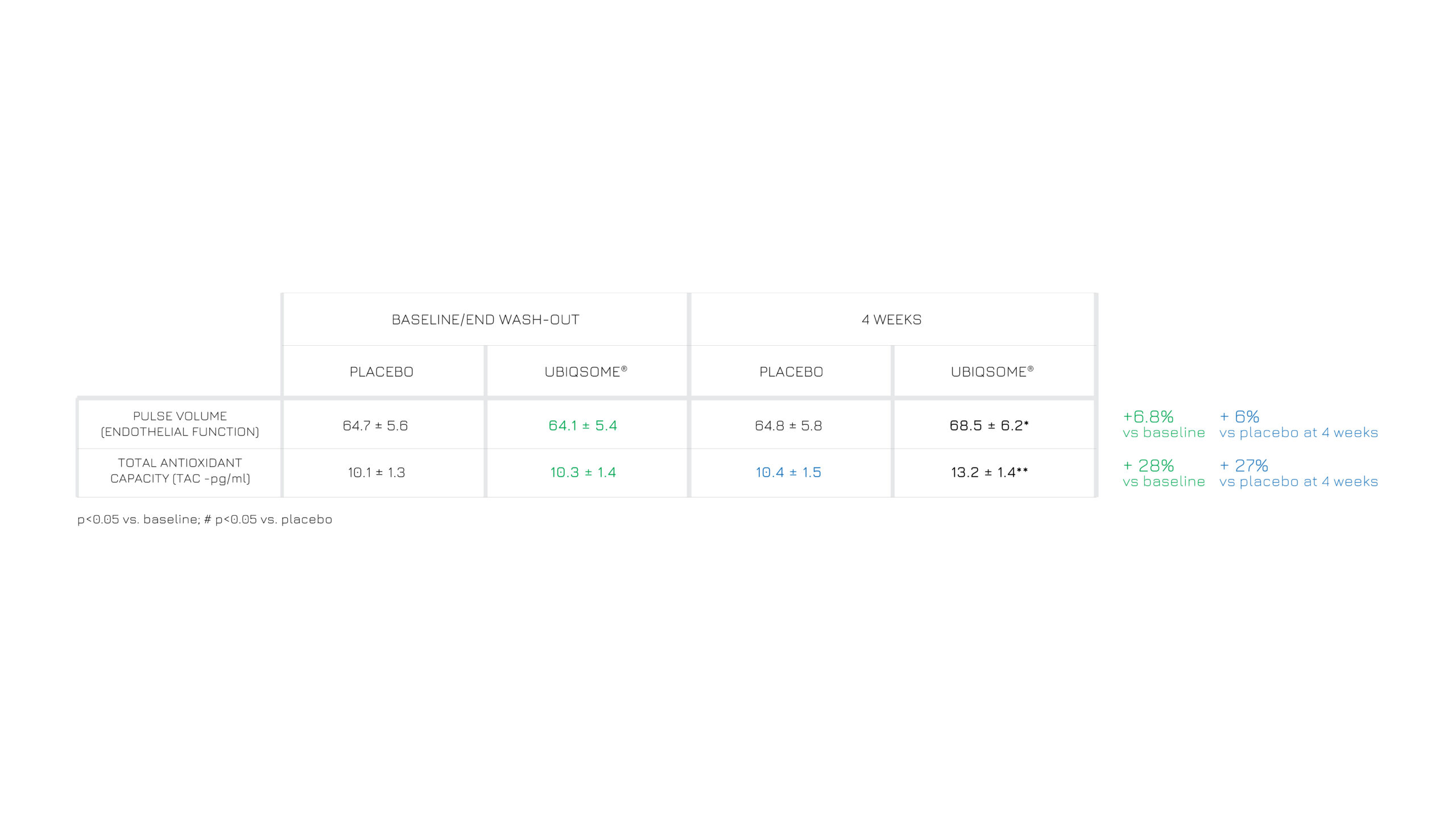
A double-blind, randomized, placebo-controlled, crossover study on healthy, non-smoker young subjects (n=20, aged 18-40) has shown an optimization of endothelial function (measured as pulse volume) and antioxidant capacity activity (TAC) after Ubiqsome® administration (150 mg twice a day) in both acute (after 2 hours) and chronic (4 weeks) settings (Figures 1, 2). 1
Figure 1: Acute evaluation of pulse volume, 2 hours after administration of Ubiqsome® or placebo.1
Figure 2: Long-term evaluation of pulse volume and TAC, 4 weeks after administration of Ubiqsome® or placebo.1
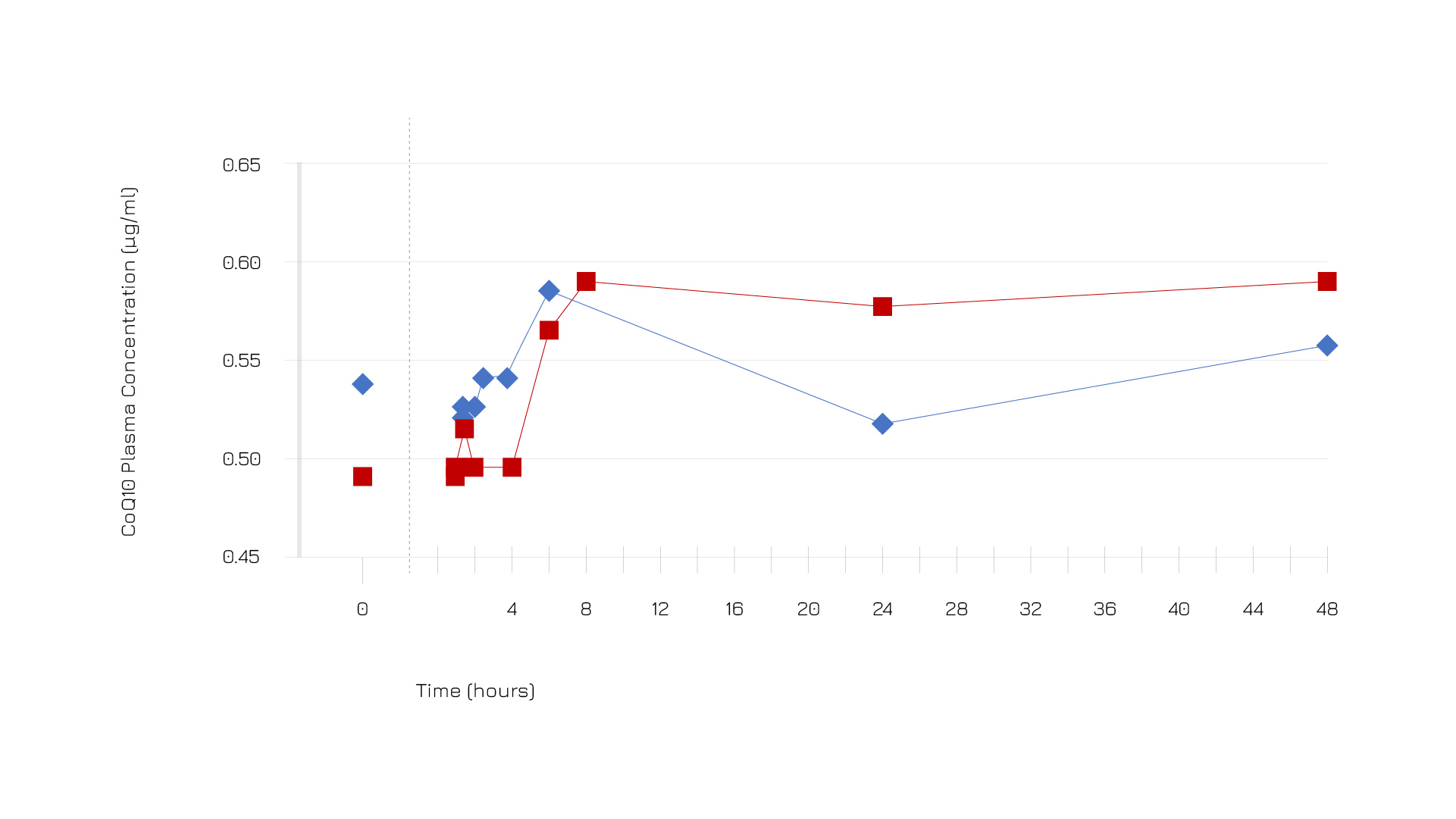
A study evaluating the solubility and oral absorption of Ubiqsome® in human volunteers has shown better bioavailability of coenzyme Q10 with Phytosome™ compared to the non-phytosomical formulation of CoQ10.
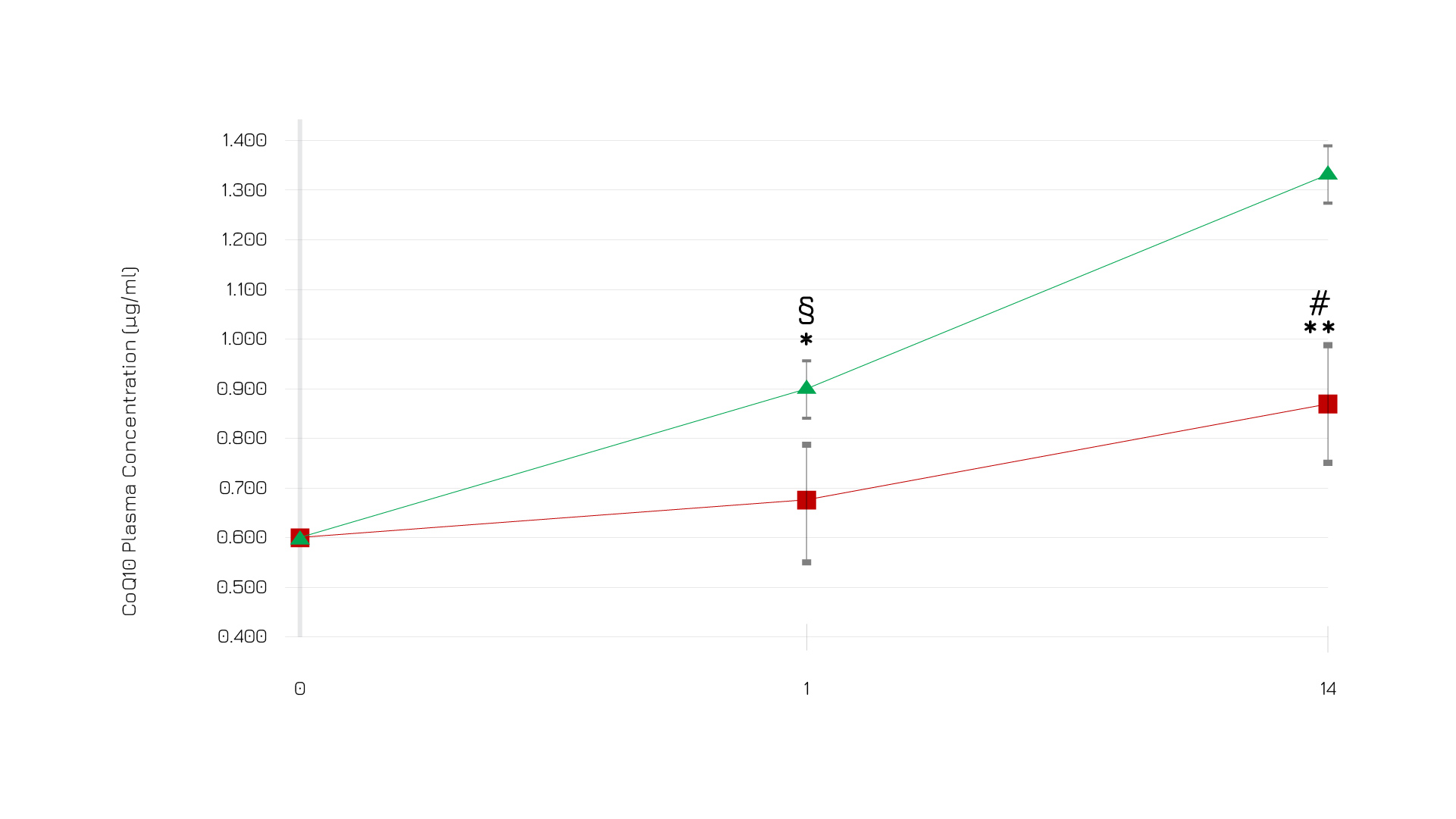
After 14 days, the administration of 2 capsules allowed for an increase in CoQ10 plasma concentration levels by 1.321 μg/ml (+116%), about 1.5 times greater than the administration of 1 capsule.
Figure3:CoQ10 plasma levels after CoQ10 and CoQ10 Phytosome™ administrations in a single-dose study in volunteers.
Figure 4:CoQ10 plasma levels after CoQ10 Phytosome™ administration in a repeated-dose study. Blue: CoQ10 Phytosome™ at the dose of 150 mg/day; Red: CoQ10 Phytosome™ at the dose of 300 mg/day.
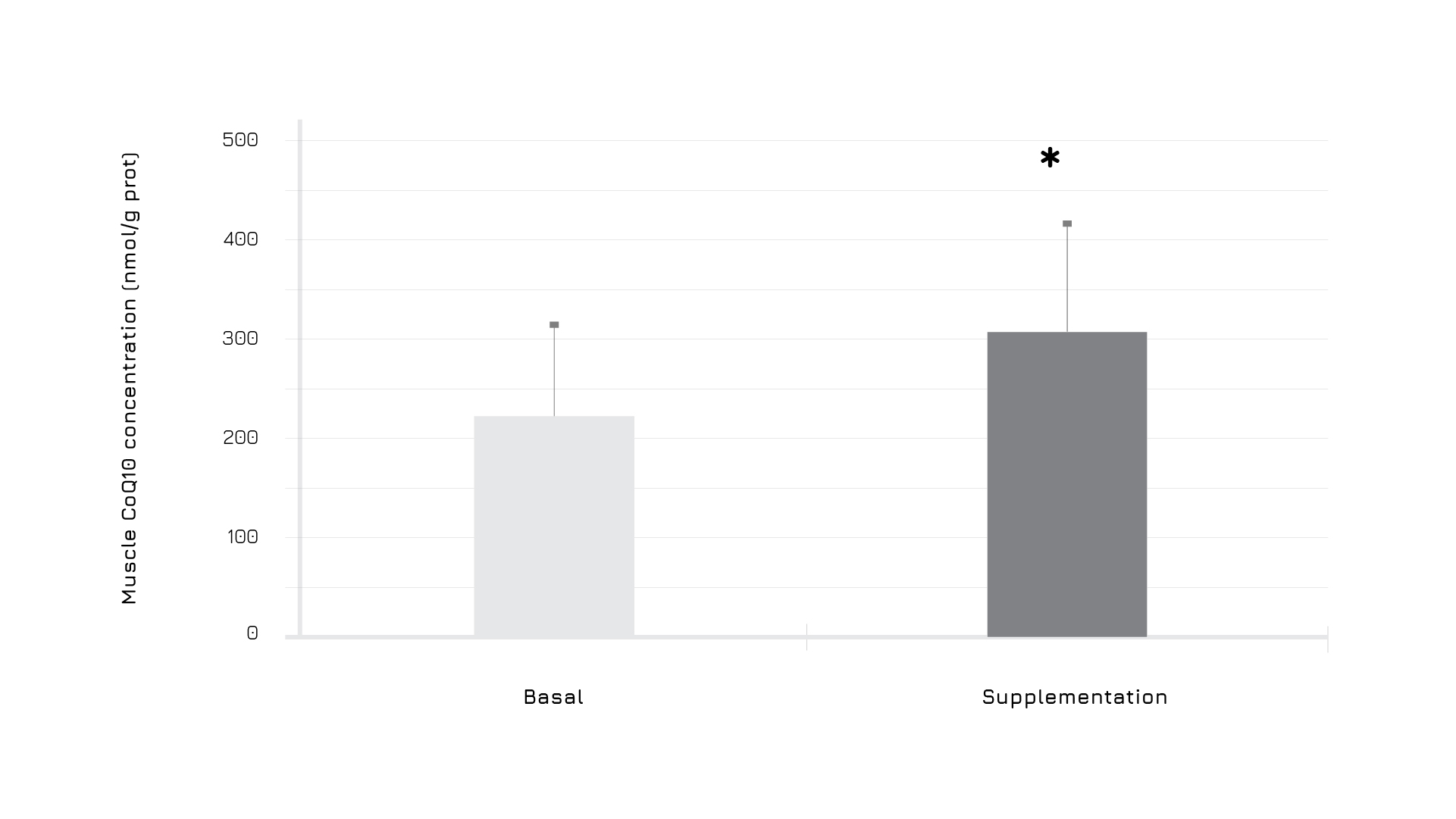
In a human study conducted on healthy athletes over 50 years old performing a complete training session in a climatic chamber, Ubiqsome® significantly optimized CoQ10 levels in plasma and muscles (Figure 5). Moreover, it improved the total antioxidant capacity (TAC) and favorably controlled biomarkers of oxidative stress and inflammation.
Figure 5:Effect of exercise and CoQ10 Phytosome™ supplementation on CoQ10 concentration in muscle.
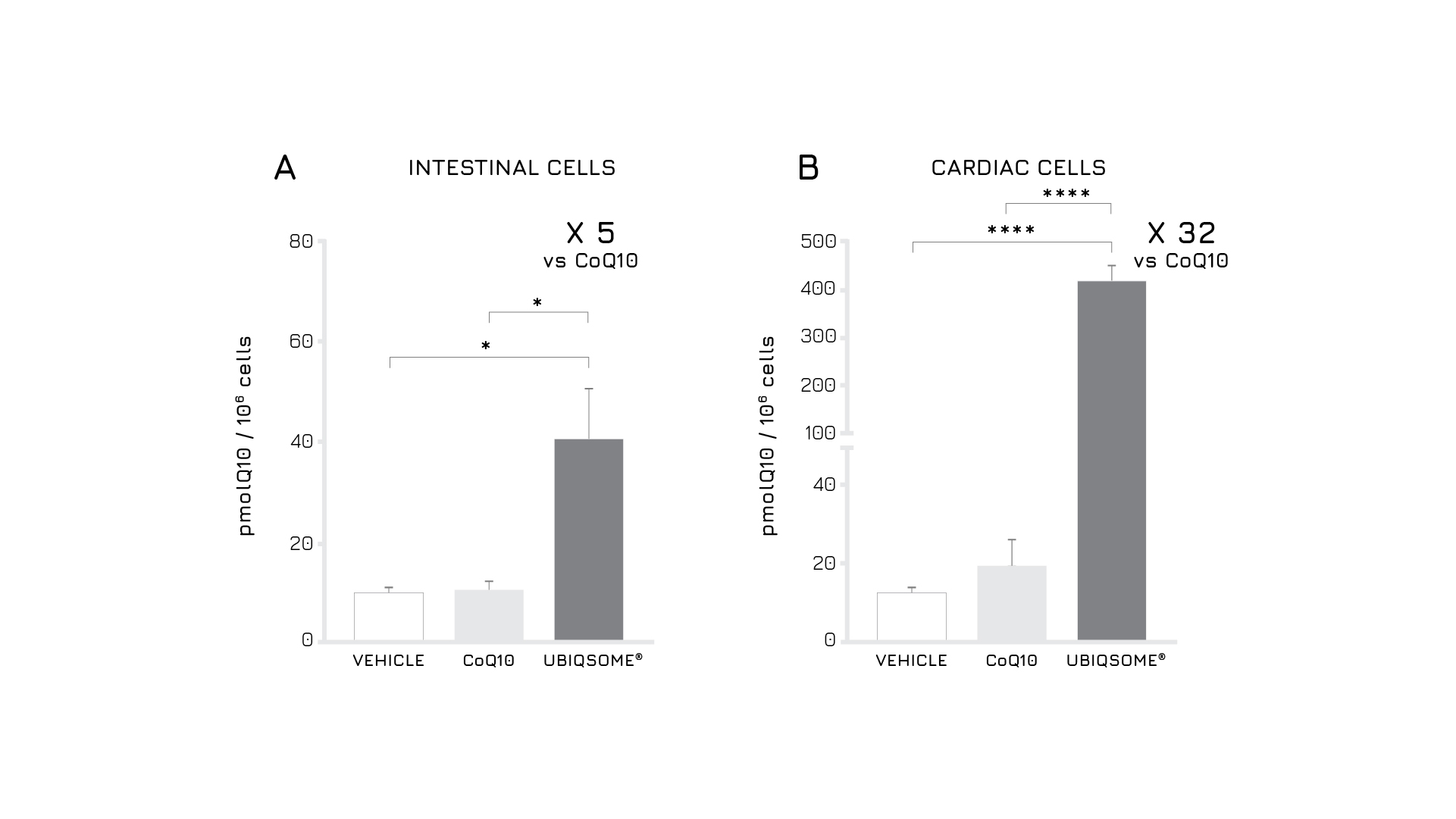
An in-vitro evaluation on muscular and intestinal cell lines has confirmed that macropinocytosis is the key mechanism for the internalization of Ubiqsome® at cellular level, since the use of a macropinocytosis inhibitor drastically reduced CoQ10 cellular content.
The same study also confirmed that the Phytosome™ delivery system enhances intracellular concentration of CoQ10, compared to the coenzyme alone (Figure 6).
Figure 6: Coenzyme Q10 determination in different cell lines after product incubation.
BIBLIOGRAPHY
1Cicero et al.; Biofactors (2022): 1-6.
2Petrangolini et al.; Current Drug Delivery (2019).
3Drobnic et al.; J Food Sci Nutr Res (2020); 3 (4): 262-275.
4Rizzardi et al.; Antioxidants (2021); 10.6: 927.

Sorry, our website doesn't support IE11 and older versions
For a better experience try a modern browser:

This is a private file, to request the download of this resource, please fullfill the fields below.